The $1,200 Question: What Actually Comes First
Walk into any big-box gym and you'll see racks, rows of dumbbells, cable stacks, and cardio machines nobody's touched since New Year's. Try to replicate all of it at home and you'll blow through a car payment before your first rep. Good news: you don't have to. A genuinely capable home gym — the kind that lets you squat, bench, press, pull, and add weight over years — runs roughly $1,200 to $2,000 in upfront gear. Against a typical $50/month membership, that pays for itself in about 2 to 3.5 years. After that, every workout is free.
The order you buy things in matters more than the total. Get the sequence wrong and you'll end up with a garage full of equipment that still doesn't let you train. Here's how to stage it.
A note on money: the numbers below are general cost guidance, not financial advice. Run your own budget before committing to a plan.
Quick answer: Buy home gym equipment in this order — a power rack first ($380–$700), then a barbell (~$305+), a bench, and adjustable dumbbells or resistance bands ($20–$480) last. This sequence lets you hit the CDC's twice-weekly strength minimum right away while you build toward a full $1,200–$2,000 setup over several paychecks.
First, Kill the Myth
Before the buy list, deal with the thing that stops people from starting at all — the belief that your first rep doesn't count until you own a full rack, barbell, plates, and bench.
It does. The CDC's guidance for adults is at least 2 days a week of muscle-strengthening work covering the major muscle groups: legs, hips, back, abdomen, chest, shoulders, and arms. That's the actual bar. A resistance band set (often under $20) or a pair of adjustable dumbbells clears it on its own. Most beginners progress fine training 2–3 times a week, which lines up with that CDC minimum and requires zero rack-mounted steel. If you're new to structured lifting, a simple beginner strength routine is enough to clear that bar with just a band or one dumbbell.
So if money's tight this month, don't wait. Start with bands or a basic dumbbell, get your two sessions in, and build out the rest of this list as budget allows.
Buy First: The Power Rack
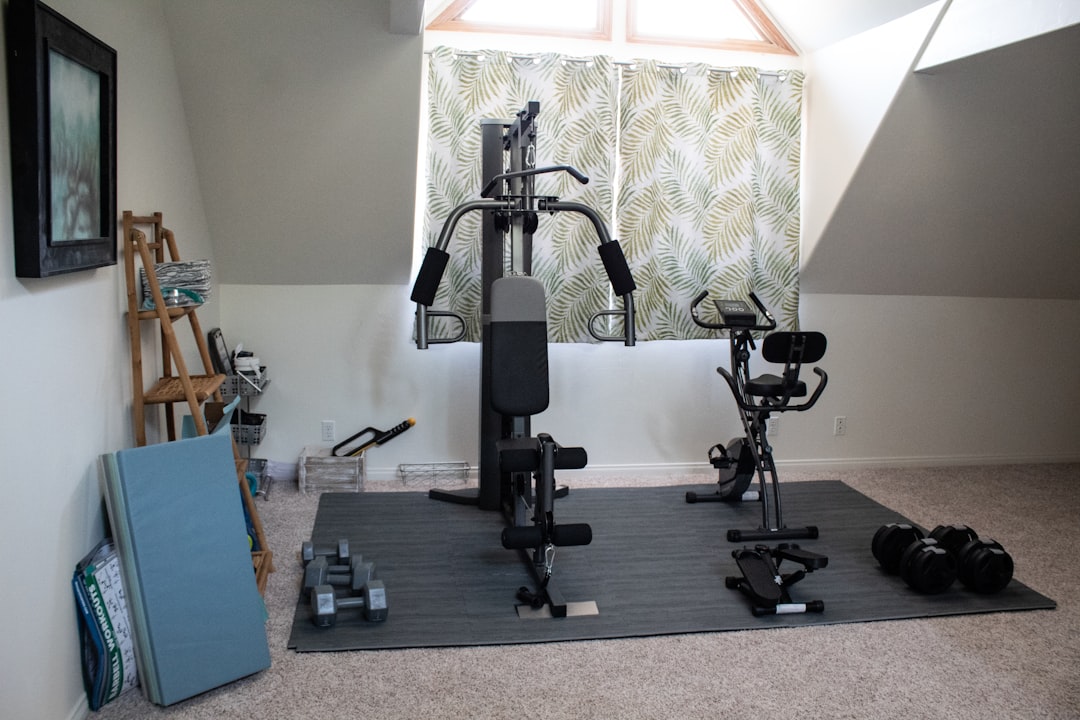
When you're ready to invest in a real setup, the power (or squat) rack is the anchor purchase — not the barbell, not the bench, not the dumbbells. Reviewers like Garage Gym Reviews consistently rank it the single most consequential buy, and the logic holds. One rack lets you squat, bench safely on spotter arms, overhead press, and do pull-ups, covering most of the core barbell lifts in a single piece of equipment. It's also your safety net when you train alone: the safety bars catch a failed rep instead of your ribs doing it.
Budget-Friendly Rack Options
- Titan T-2 Series rack — around $399
- A basic PR-1100-style rack (roughly 700 lb capacity) — around $380
A Modular Step-Up
- Force USA MyRack — base price around $499.99, with attachments sold separately, so a loaded configuration climbs from there
Step Up a Full Tier If You Can
- REP Fitness PR-4000 — around $699, with more capacity and rigidity for anyone planning to add weight over years, not months
Whatever you pick, this is the line item not to skimp past your space and budget. Everything else here assumes the rack is already bolted down or sitting stable.
Second: A Barbell You Trust
A rack without a bar is a very expensive clothes hanger. The Rogue Ohio Bar is a widely trusted budget-tier pick, sold separately from any rack. Pricing runs from about $305 for the base black zinc / e-coat finish up to roughly $370 for stainless (black oxide sits around $320 in between). It's a no-frills bar that handles squats, bench, deadlifts, and overhead pressing without a specialty bar for each lift. Plates are their own line item; shop them by price-per-pound when you buy, since plate pricing swings more with the steel and urethane market than rack pricing does.
Third: A Bench
With a rack and bar in place, a flat-to-adjustable bench unlocks bench press, incline work, and a stable base for rows, step-ups, and other accessories. Lower stakes than the rack or bar — most mid-range benches from the same brands making budget racks (Titan, REP, Force USA) will do the job. Two things to check before buying: weight capacity against your bar-plus-plates-plus-bodyweight total, and whether it folds flat if the room doubles as a garage or guest space.
Fourth: Dumbbells — With a Real Recall Warning
Adjustable dumbbells are the space-saving answer to a full rack of fixed pairs. The most popular pick here is the Bowflex SelectTech 552, which adjusts from 5 to 52.5 lb per dumbbell in mostly 2.5 lb increments — roughly 15 sets of fixed dumbbells in the footprint of two. It runs about $399–$479 depending on retailer sales.
Now the caveat, and it isn't minor: the Bowflex SelectTech 552 and 1090 were recalled by Johnson Health Tech Trading on June 5, 2025, because weight plates can dislodge during use. Already own a pair? Check the official recall remedy before you keep using them. Buying new? Confirm with the retailer or manufacturer that you're getting post-recall stock before it goes in your cart. Don't assume every unit on a shelf or resale listing has been fixed.
If that gives you pause, the alternative is simple: a basic set of fixed-weight dumbbells or a resistance band set costs less up front and carries no recall risk. The tradeoff is that bands make it harder to track progressive overload precisely and repeatably compared with free weights. That cuts both directions — not a reason to write off bands, just something to weigh against your goals.
Fifth: Flooring and the Small Stuff
Once the big four (rack, bar, bench, dumbbells or bands) are sorted, flooring is the next practical buy. The right garage gym flooring — rubber gym tiles or interlocking mats — protects both your slab and your gear, and it earns its keep the moment you start dropping loaded bars or dumbbells. After that, collars for the barbell and a set of resistance bands for warm-ups and mobility (a supplement to your main lifts, not a substitute) round out a setup that covers strength, safety, and floor protection with no luxury add-ons.
What to Skip Until You've Outgrown the Basics
Cable machines, cardio equipment, and specialty bars (safety squat bars, trap bars) are all worth considering eventually. But they solve problems you probably don't have yet on a first setup. A rack, a bar, a bench, and a way to load resistance — weights or bands — covers the CDC's twice-weekly, major-muscle-group minimum and then some. Everything past that is refinement, not requirement.
Putting the Order Together
If you're spreading purchases across a few paychecks instead of buying it all at once, this order keeps you training the whole way instead of waiting for a "complete" setup:
- Start now, cheap: resistance bands or one adjustable dumbbell (under $20 up to ~$400) to hit your 2–3 weekly sessions immediately.
- Rack ($380–$699) — the safety and capability backbone.
- Barbell (~$305 and up, depending on finish) — turns the rack into a full lifting station.
- Bench (varies) — unlocks bench press and accessory work.
- Dumbbells ($399–$479, recall-checked) or a fixed-weight/band alternative.
- Flooring and small accessories — protects everything above.
Add it up and you land in that $1,200–$2,000 range, built in an order that never leaves you unable to train while you save for the next piece. The goal isn't a showroom garage. It's a setup that gets you under a bar — or a band — twice a week, for years, with no monthly fee.
Frequently Asked Questions
How much does it cost to build a home gym from scratch?
A full setup with a power rack, barbell, bench, and dumbbells typically runs $1,200 to $2,000, though you can start training for under $20 with just a resistance band set and add pieces over time.
What piece of equipment should I buy first for a home gym?
Buy the power rack first, not the barbell or dumbbells. It's the safety backbone for squatting and benching alone, and most budget racks like the Titan T-2 or PR-1100 run $380–$400.
Is the Bowflex SelectTech 552 still safe to use?
Only if it's post-recall stock. Johnson Health Tech Trading recalled the SelectTech 552 and 1090 on June 5, 2025 over dislodging weight plates — check the remedy before using an existing pair or buying new.
Can I get a good workout at home without buying a barbell or rack?
Yes. The CDC's minimum is 2 days a week of muscle-strengthening exercise, which a resistance band set or a single adjustable dumbbell can satisfy on its own — no rack required.
How long does it take for a home gym to pay for itself versus a gym membership?
Against a typical $50/month membership, a $1,200–$2,000 home gym setup breaks even in roughly 2 to 3.5 years, after which every workout is effectively free.
Ready to fill in the rest of the room? Read our complete garage gym setup guide for the full accessory list once your core four pieces are in place.