
Hey friends. Grab a coffee, this one's fun.
I've got a drawer in my desk I actually call "the drawer of shame." Inside it: a half-soldered Arduino thing, three resistors I never found a use for, and a spool of PLA filament that's been sitting there since the night I convinced myself I needed a 3D printer. Here's the twist. That whole drawer cost me less than one night out with the guys, and it's handed me more real satisfaction than most of the hobbies that quietly drained my wallet I've thrown money at over the years. Building a physical thing with your own hands does something to my brain. Or watching a machine build it while I hover nearby like a proud dad at a recital. Either way, nothing else scratches that itch.
Quick answer: The cheapest way into hands-on maker hobbies is a $4 Raspberry Pi Pico for coding simple electronics, a $5-31 balsa wood airplane kit for screen-free building, or a $169-219 Ender 3 V3 SE if you want full 3D printing. Each costs less than a night out and delivers lasting, tactile satisfaction with no subscriptions or hidden costs.
So if you've got the itch too — that "I want to make something, not just scroll past something" feeling — here's how I'd get in cheap. What this stuff actually costs. And where the traps are hiding, because there are always traps.
🖨️ 3D Printing: The Gateway Drug
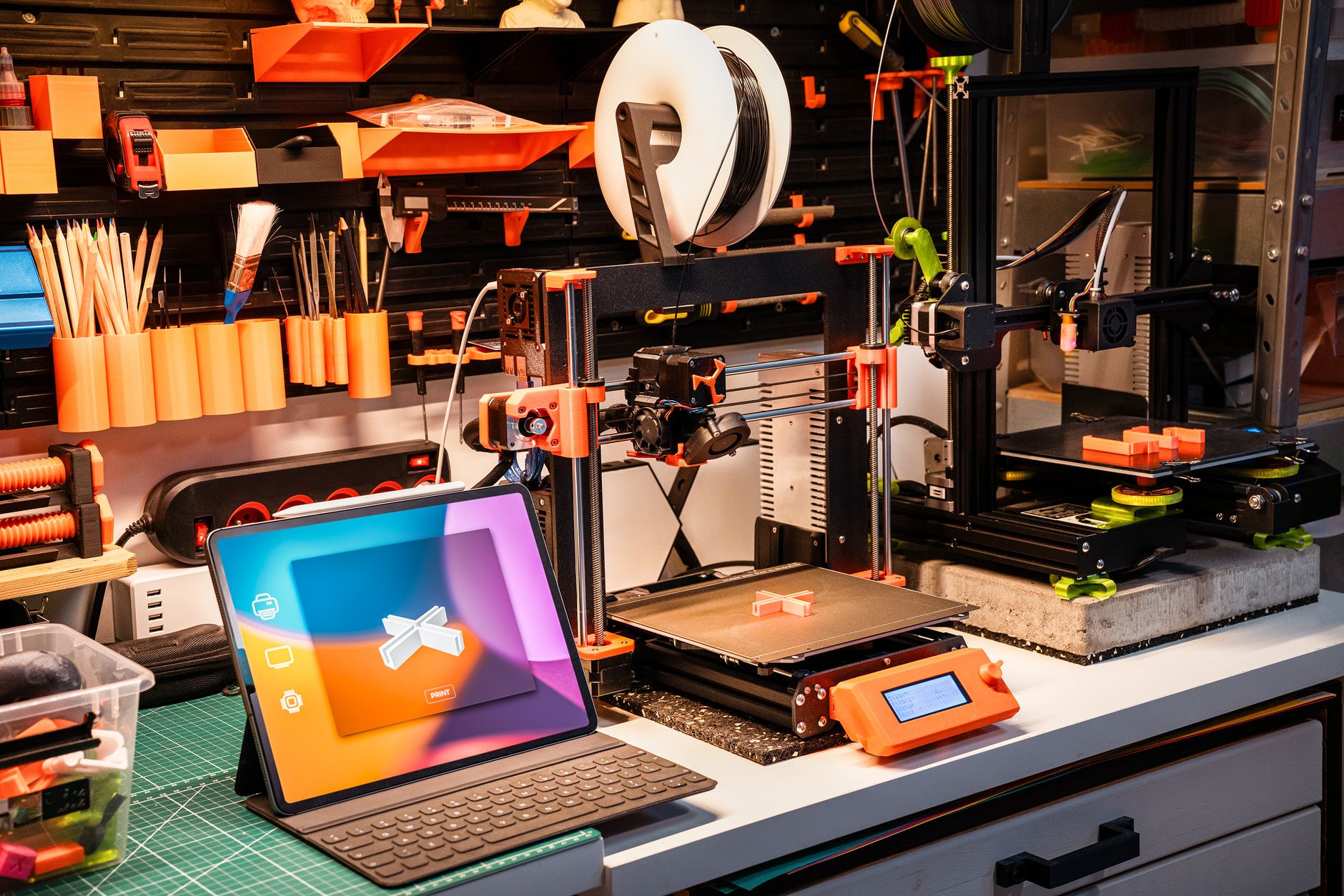
Everybody asks about this one first, so let's start here. The Creality Ender 3 V3 SE lists around $199-219 MSRP, but it's on sale constantly for $169-186. Real talk though: this isn't a five-dollar-kit kind of cheap. It's the budget-friendly floor for an actual 3D printer, and I think that difference matters. You're not buying a toy. You're paying for auto bed-leveling, a direct-drive extruder, and a machine that shows up mostly built instead of a box of mystery parts and a silent prayer.
What the Ender 3 V3 SE Actually Costs
Between the printer itself and a spool or two of filament to get started, you're realistically looking at $200-250 all-in for your first month of printing. That's the real number, not the sale-price headline.
My First Print Was a Disaster (Here's Why)
What actually went down when mine arrived? I read "near-fully assembled" and heard "plug and print." Not quite, buddy. Budget an evening for setup, calibration, and your first glorious failed print. Mine came out looking like a plate of spaghetti somebody dropped. Very avant-garde. Very not-a-phone-stand.
Once it's dialed in, though? Phone stands, cable organizers, replacement doohickeys for stuff around the house, and eventually whatever cursed little object you stumble onto at 1am on Thingiverse. The filament's cheap — a spool runs maybe $15-25 and cranks out dozens of small things. The real price tag here is patience during setup, not dollars.
🔌 Microcontrollers: $4 Buys You a Whole Rabbit Hole
If a printer feels like too big a leap, microcontrollers are hands-down the cheapest way into "I built a thing that does a thing." The Raspberry Pi Pico is $4. Not $4 for some stripped-down starter kit. Four dollars for the board. That's it.
Pico Pricing Breakdown
Want wireless? The Pico W is $6. The newer Pico 2 is $5, and the Pico 2 W is $7. Those are the official prices straight off raspberrypi.com, and it's honestly a little absurd how much computing you're holding for less than a value meal.
Pico vs Raspberry Pi: The Confusion I Had
Quick myth-bust, because I got this wrong for embarrassingly long: the Pico is NOT a tiny Raspberry Pi computer. No Linux. No operating system. Not the thing you plug a monitor into. It's a bare RP2040 microcontroller board, made by Raspberry Pi (Raspberry Pi Ltd, the same folks behind the Linux-running single-board computers), but it's a totally different animal from those. Picture it as the brain for one specific job — blink an LED, read a sensor, spin a motor — rather than a do-everything computer. The second that clicked for me, the whole ecosystem suddenly made sense.
🛠️ Arduino: The OG, and Why the $5 Clones Aren't Ripping You Off

Before the Pico, there was Arduino. Still a fantastic cheap way in. An official Arduino Uno Rev3 — the one running the ATmega328P chip — comes through store.arduino.cc or SparkFun and costs more than the clones do.
Official Arduino Uno vs $5 Clones
And here's the part that genuinely surprised me. Clone Uno R3 boards go for as low as ~$5 on AliExpress, and they are not fakes and they are not illegal. Arduino's hardware design is open-source, so anybody can legally build and sell compatible boards. I spent way too long dodging clones because I assumed I'd be buying knockoff junk. Turns out I was just leaving money on the table like a chump.
My first real Arduino build was a dumb little temperature-triggered fan for my desk. Took a weekend, included exactly one "why won't this LED turn OFF" meltdown that turned out to be a loose breadboard wire, and cost me under $15 total with the sensor. A full weekend of legit problem-solving for less than movie tickets and popcorn for two.
✂️ Plastic Model Kits: Analog, Calming, and Cheaper Than You'd Guess
Not everything here needs a battery or a line of code. If you want something fully screen-free, plastic model kits are having a real moment right now, and three names carry the whole scene: Tamiya, Revell, and Airfix. Those are the big players, and you'll spot them at any hobby shop.
Starter Kits vs Standard Kits
Brand new? Look specifically for Revell's "Starter Kit" line, because it bundles the paint and glue right in with the kit. That is not the norm. Most model kits sell you the plastic alone and just assume you already own glue and paint. Which is precisely how I ended up halfway through assembling a kit with absolutely nothing to paint it. Standing there holding a brush I didn't have.
The whole vibe here is different from the electronics stuff, and I mean that as a compliment. It's slow. It's tactile. There's no debugging a code error at midnight. Just you, a tiny brush, and hands that get steadier the longer you sit there.
✈️ Balsa Airplanes: The Cheapest Build-Something Hobby, Period
You want the absolute rock-bottom cost of entry into "I built a real object and it actually works"? Balsa wood airplane kits. Guillow's and Dumas Products are the two classic American brands, and kits run roughly $8 to $75.
Balsa Kit Price Range and Tools Needed
For a concrete number: a Dumas P-47 Thunderbolt rubber-powered kit goes for about $31.95. On the low end you're spending less than a two-topping pizza on a kit that quietly teaches you real aerodynamics, structural building, and finishing.
The catch is tools. You'll want a basic set — hobby knife, cutting mat, sanding stick — and a decent one from a supplier like Easy Built Models runs about $65-80. That's a one-time hit, though, and it covers you for every balsa kit you'll ever build after. So planes two and three are genuinely cheap.
💰 A Quick Money Note (Not Financial Advice)
Since this whole site is partly about building real freedom with your money, let me say the obvious. None of this is financial advice. It's just my own budgeting logic talking, the same logic behind why I stopped chasing subscription hobbies. What I actually love about these hobbies isn't only that they're cheap upfront. It's that they're cheap over and over. A $4 Pico or a $6 balsa kit never hits you with a monthly subscription. Never nudges you toward the $2,000 "pro" version six months in. Never bleeds value the way most gadget-hobbies do.
Compare that to the treadmill-to-coat-rack pipeline. We've all lived it at least once. Be honest.
🚀 How to Actually Start This Weekend
Do not buy this entire list at once. That's literally how the drawer of shame gets born. Pick one, and if you want more structure around picking just one thing and sticking with it, that's basically my simple weekend project framework:
- Want instant payoff and don't mind troubleshooting: Grab a Pico ($4), follow one beginner tutorial to blink an LED, then let it snowball from there.
- Want screen-free and calming: Get a Revell Starter Kit so you're not stranded without glue like I was.
- Want the cheapest possible "wait, did that just FLY" moment: Order a Guillow's or Dumas kit and a basic tool set.
- Ready for something bigger and longer-term: The Ender 3 V3 SE is the move. Just block off a real evening for setup, not fifteen optimistic minutes.
Whatever you go with, the goal isn't to be some expert by next Sunday. It's having something sitting on your desk or workbench that flat-out didn't exist before you touched it. And for under $20 in most cases, that's a pretty ridiculous return on plain old "build something" energy.
❓ Frequently Asked Questions
What's the cheapest 3D printer for a total beginner? The Creality Ender 3 V3 SE is the best budget entry point at $169-219, since it comes mostly assembled with auto bed-leveling already built in. Cheaper printers exist, but they usually skip features that make your first week frustration-free.
Is the Raspberry Pi Pico good for beginners with no coding experience? Yes — at $4, it's the cheapest way to learn basic embedded coding, and most beginner tutorials walk you through blinking an LED with zero prior experience. Just remember it's a microcontroller, not a mini computer, so there's no operating system involved.
Are cheap Arduino clones from AliExpress actually safe to use? Yes. Arduino's hardware design is open-source, so ~$5 clone Uno R3 boards are legal and functionally identical to the official $20+ board. You're paying extra for the official version's branding and support, not extra reliability.
What tools do I need to start building plastic model kits? At minimum you need glue and paint, which is why Revell's "Starter Kit" line is worth seeking out — it bundles both in with the kit itself. Standard kits from Tamiya, Revell, or Airfix assume you already own both.
How much does it cost to build a balsa wood airplane from scratch? A single kit from Guillow's or Dumas runs $8-75, with something like the Dumas P-47 Thunderbolt landing around $31.95. Add a one-time $65-80 basic tool kit (knife, cutting mat, sanding stick), and every kit after that stays cheap.
Go make a mess. Report back. And if today's post got you thinking about where the rest of your "fun money" actually goes, the cheap gadget that made me rethink my whole hobby budget is a good next read.