<<<Hey friends. Let me tell you about the dumbest cut of my life.
A few years back I decided I was going to get "shredded" for summer in about six weeks. (Six. Weeks. I still cringe.) So I slashed my calories hard, piled a bunch of extra cardio on top of my lifting, and watched the scale drop like a rock. Felt like an absolute genius for about three weeks.
Then things went sideways. My bench stalled. My shirts started fitting weird in the bad way — loose in the chest, still snug around the gut. I was cold all the time and grumpy at everyone, including the guy at the coffee shop who did nothing wrong. I'd gotten smaller, not leaner. Classic rookie move. I'd traded muscle for a smaller number on the scale, which is just about the worst deal in all of fitness.
It took me embarrassingly long to figure out why that happens and how to dodge it. And the annoying part? The fix isn't some secret supplement or a fancy macro app. It's mostly about slowing down and doing a few boring things on repeat. Here's the routine that finally worked for me.
Quick answer: To cut fat without losing muscle, lose weight slowly (0.5–1% of bodyweight per week), keep your deficit around 500 calories a day, eat 1.6–2.5g of protein per kg of bodyweight, and keep lifting at the same intensity you would in a maintenance phase. Speed — not just deficit size — determines how much muscle you actually keep.
💥 Why cutting fast backfires
Your body has no idea you're dieting "on purpose." As far as it's concerned, calories dropped and there might be a famine coming, so it starts eyeing your muscle as an energy reserve it can burn right alongside the fat. Especially if you don't give it a loud reason (like heavy lifting) to hang onto that muscle.
The research here is honestly kind of brutal. In a study of elite athletes cutting weight, the group that lost weight slowly — about 0.7% of bodyweight per week — actually gained lean body mass (+2.1%) during the cut. The group losing twice as fast, at 1.4% a week? Their lean mass just sat flat. No gains, and a lot closer to the edge of losing it. Same goal, same effort, wildly different result. The only real difference was speed.
That completely reframed the problem for me. It's not "cut slow because it's the safe, cautious thing to do." It's "cut slow because it measurably keeps more of the muscle you worked for."
🐢 The weight-loss rate that actually preserves muscle
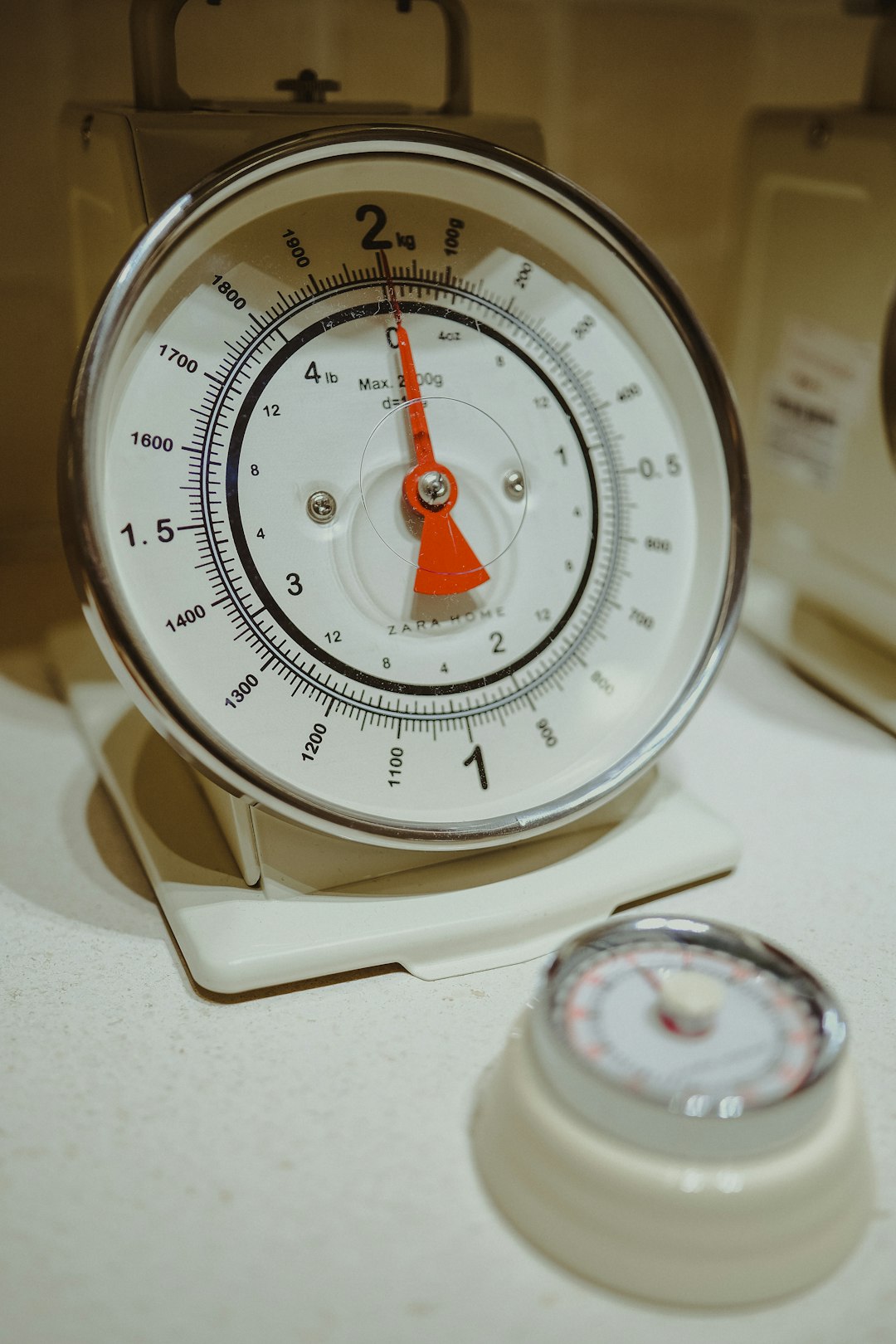
The number to anchor to is 0.5–1% of your bodyweight per week. If you're 180 lbs, that's roughly 1–1.8 lbs a week. At 220, more like 1.1–2.2 lbs. Notice it's a range tied to your size — not the flat "lose 2 lbs a week" rule everybody parrots.
These days I weigh myself every morning and take the weekly average. Single days bounce around too much with water and last night's dinner to mean anything (I once "gained" three pounds overnight after sushi, and no, I did not panic-cut the next day like old me would have). If the trend is dropping somewhere in that window, great. If I'm losing faster than that, I add a little food back. If I've truly stalled for two full weeks, I trim a small amount — not a dramatic one.
📉 Setting a calorie deficit you won't pay for later
Here's what I really botched the first time: I didn't just cut too fast, I cut too deep. A solid general starting point for fat loss is a deficit of around 500 calories a day, which lands you near a pound a week. Push much past that when you're already fairly lean and you're leaning on your body harder than it can keep up with, and muscle becomes the tax you pay.
Worth knowing: the ISSN specifically advises leaner folks to diet more conservatively and aim for that 0.5–1% of bodyweight per week rather than flooring it. So instead of guessing, I start by working out how to calculate your maintenance calories, subtract about 400–500, and that's my starting number. And I stopped stacking a mountain of extra cardio on top of the deficit hoping to speed things along. All that does is quietly make the real deficit bigger than the one on paper — which is exactly the trap I face-planted into before.
🍗 Protein: the number that actually matters on a cut
I used to treat the "1 gram per pound of bodyweight, no exceptions" rule like scripture. Turns out it's not the ceiling I thought it was — and when you're cutting, it might even be a floor.
When you're in a deficit, your protein needs go up, not down. Your body is more willing to burn muscle for fuel, and protein is what talks it out of that. The floor for a lean, trained lifter on a cut sits around 1.6 g/kg of bodyweight, and a lot of the research points higher — often 1.9 to 2.5+ g/kg (roughly 0.9 to 1.1+ g/lb) to really protect muscle while you're dieting. So this is one of the few places where erring on the high side genuinely pays off. If you want the deeper breakdown of why the old "1g per pound" rule undersells it, I go into that in how much protein you actually need to build and keep muscle.
For a 180-lb guy, that's somewhere in the neighborhood of 150–180 grams of protein a day. I hit it with a protein source at every meal — eggs or Greek yogurt in the morning, chicken or ground turkey at lunch, fish or lean beef at dinner, and a shake if I come up short. Nothing clever. Just consistent.
🏋️ Lifting is the non-negotiable part
Cardio does not tell your body to keep its muscle. Resistance training does. Multiple recent studies (including 2024–2025 work on low-calorie diets paired with exercise) keep landing on strength training as the lever that signals "hey, keep this tissue, we're clearly still using it" while a deficit is running. Cardio's great for burning some extra calories and for your heart, but it's not the thing guarding your muscle.
So my rule during a cut is simple: training volume and intensity stay right around what they'd be in a maintenance phase. I don't quietly drop sets or grab lighter dumbbells just because I'm eating less. If anything I make sure I'm still grinding close to failure on the big lifts. The calories go down. The effort in the gym does not. I stick to the same best rep ranges for building strength and size I'd use any other time of year — cutting is not the season to reinvent your programming.
📅 What my week actually looks like
Training split
Four lifting sessions a week — I split it into push, pull, legs, and a full-body or weak-point day. Each session is built around 2–3 compound lifts (squat, bench, row, overhead press variations) for 3–4 sets in the 5–10 rep range, then some accessory stuff to chase the pump and hit the small muscles.
Cardio and meals
I'll add 2–3 cardio sessions, and I do mean chill ones — 20–30 minutes of incline walking or easy cycling. That's for recovery and keeping my appetite honest, not for cranking the deficit wider.
Meals are just that protein source plus a fist or two of carbs (rice, potatoes, oats) and vegetables at most meals. Fat mostly comes along for the ride from cooking oil, nuts, and eggs rather than getting tracked to the gram. I've got enough to think about.
📸 Tracking progress without losing your mind over the scale
The scale trend is one input. Just one. What matters at least as much: are my main lifts holding steady or still creeping up? If my squat and bench start sliding backward for more than a couple weeks, that's a way bigger red flag to me than the scale being lazy. I've written before about how often you should actually weigh yourself during a cut, if the daily-number spiral sounds familiar.
I also snap a progress photo and take a couple of tape measurements (mostly the waist) every two weeks. Honestly, the way my clothes fit and the way I look in the mirror tell me more about the fat-versus-muscle story than the number on the scale ever has. The scale can't see the difference. My jeans can.
🚫 The myths that wasted my time
Two beliefs cost me the most. First, that any calorie deficit is the same as any other for keeping muscle, as long as the total weight lost matches up. Second, that protein basically doesn't matter as long as you eat "a lot."
Neither one holds. The size and speed of the deficit both independently decide how much muscle you keep — a fast, deep cut and a slow, gentle one can drop the same pounds and leave you in totally different shape. And on a cut, protein needs climb rather than fall, so "eyeball it" is not a plan.
If I could hop in a time machine and redo that six-week disaster (and apologize to that innocent coffee shop guy), I'd stretch it to twelve or fourteen weeks, keep the deficit around 500 calories, push protein toward the high end near 2 g/kg, and keep lifting like I meant it. Slower, more boring, and it actually works. Which, in my experience, is almost always how these things shake out.
❓ FAQ: cutting fat without losing muscle
How many calories should I cut to lose fat without losing muscle? Start around a 500 calorie-a-day deficit off your estimated maintenance. That lands near a pound a week for most people, which fits inside the 0.5–1% of bodyweight per week range that the research ties to keeping lean mass intact. If you're already lean, lean toward the smaller end rather than flooring it.
Is a 500 calorie deficit enough to lose fat without muscle loss? For most people, yes — it's a solid general starting point, not a hard cap. What matters more is checking it against your actual weekly weigh-in trend and adjusting from there rather than assuming one fixed number works forever.
How much protein do I need on a cut to keep muscle? Treat 1.6 g/kg of bodyweight as a floor, not a target. A lot of research on dieting lifters points to 1.9–2.5+ g/kg (about 0.9–1.1+ g/lb) as the range that actually protects muscle best, which for a 180-lb lifter works out to roughly 150–180 grams a day.
Should I do cardio or just lifting while cutting? Keep lifting at the same volume and intensity as your maintenance phase — that's what signals your body to hold onto muscle. Cardio is fine in moderate doses for recovery and heart health, but stacking on extra cardio just to widen the deficit tends to backfire by making the real deficit bigger than you planned.
How fast should I lose weight to avoid losing muscle? Aim for 0.5–1% of your bodyweight per week. Studies on athletes cutting weight found the slower group actually gained lean mass, while a group cutting twice as fast saw lean mass stay flat — same total fat loss, very different outcome for muscle.
Once you've actually hit your number, the real risk shifts — most people blow right back past it. If that's you next, go read how to reverse diet after a cut without rebound fat gain before you touch your calories again.>>>